
Ink in Your Veins?
People often ask, Is it really true you have ink in your veins?
I do.
From ages eleven to fourteen, I had a Valley News & Green Sheet paper route, delivering newspapers by bike to every house on the streets surrounding my parents’ home on 7445 Donna Avenue, Reseda, California, in the San Fernando Valley.
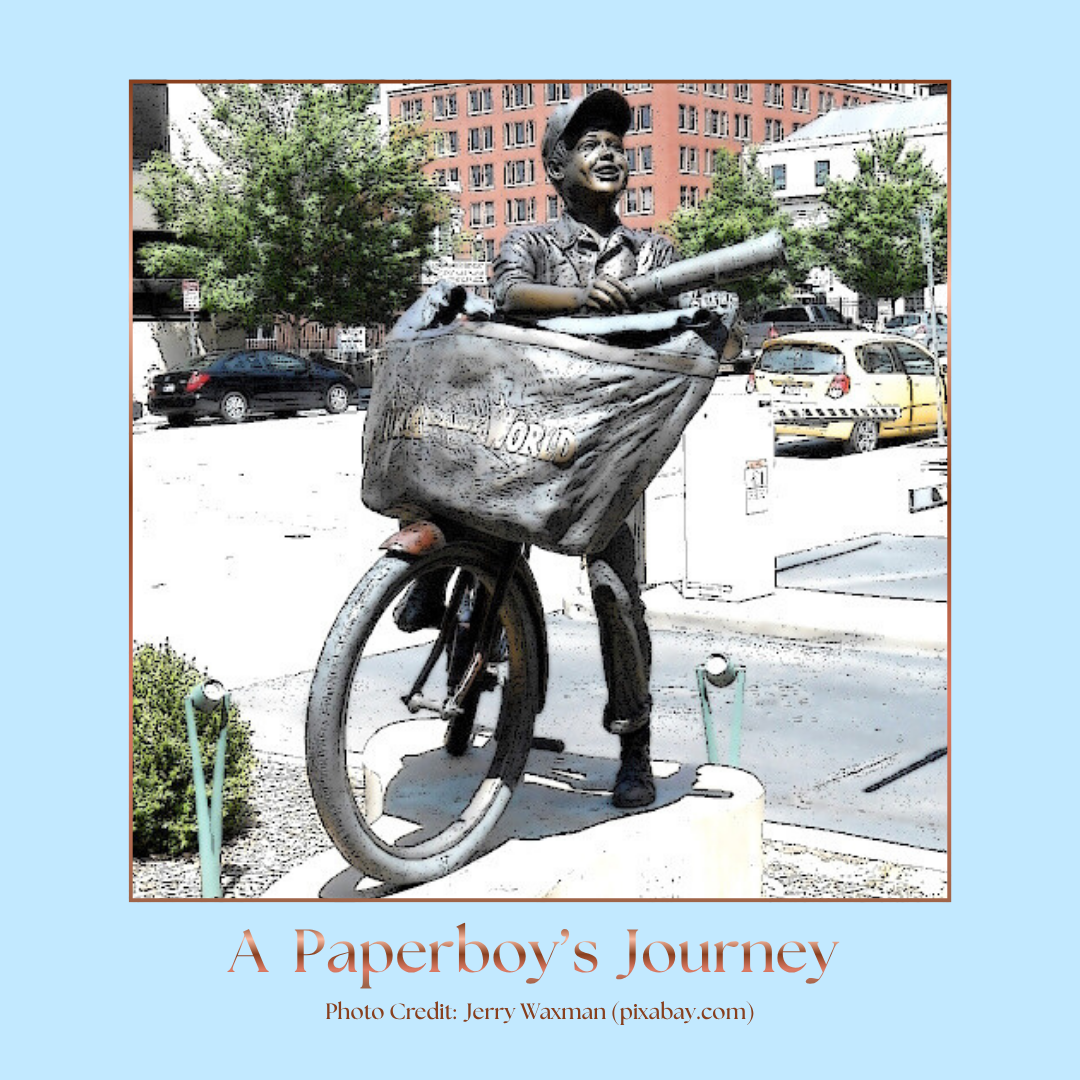
One year, the Green Sheet invited all the paperboys to tour the newsroom and the printing press. From then on, I wanted to work for a newspaper. Something about the rumble of presses, the slap of newsprint, and the dense, oily aroma of printers’ ink.
At Northridge Junior High, I took Print Shop. There I learned to set type, letter by letter—totally old school. And I took a typing class. My logic? Back then, reporters used typewriters. To be a news reporter, I would need to know how to type, and... I’d need a typewriter. So I saved up enough money from my paper route to buy an Olivetti portable. I was on my way to a Pulitzer.
But it wasn’t until I was thirty years old that I got a chance to make my dream of being a reporter a reality.
The year was 1981.
It was the first day of class in my second semester of MBA school when serendipity struck. I was sitting in one of my required core courses: Financial Accounting.
The professor introduced himself, handed out the syllabus, and asked if there were any certified public accountants in the room.
I raised my hand.
“You’re out,” he said. “Go find another class. This course is nothing more than Accounting 101. Go take something else.”
I know when I’m not welcome, so I left and wandered the halls of the Jesse Knight Building (where the MBA program was housed at the time).
Go take something else?
Easy for the professor to say. The problem was that my MBA program was lockstep with a fixed curriculum and no electives. At least not for the first year. All the classes were prescribed core requirements in business fundamentals. I sought advice from the Dean of the Business School. He said he’d waive the Financial Accounting class if I took an independent study.
Simple enough.
All I had to do was come up with an idea for a project, find a professor to sponsor me and serve as my advisor. Mind you, classes had already started, and faculty teaching loads were fully assigned.
I came up with this crazy idea of writing a financial column for The Daily Universe. No one on the paper’s staff was currently doing it. (In fact, no one at the university’s student-run newspaper had ever done it.) Fortunately for me, I had several published magazine articles under my belt, so at least I had some credentials. I put together a portfolio of my work and wandered the halls anew, this time targeting members of the Business Communication faculty in the B-School. All I needed was one sympathetic ear.
That’s when I met Dr. Paul R. Timm. He was excited about my writing, especially the article entitled “Self-Startability” published in Positive Living Magazine. And he was open to having his department add an independent study section for me.
With Paul as a sympathetic ear, that left only one major hurdle: Getting on as a reporter at The Daily Universe.
Fortunately, Paul had a contact in the College of Fine Arts and Communications (CFAC), home of the Journalism Department, which sponsored the university newspaper. Shortly thereafter, I met with Dr. Brent Peterson, CFAC Associate Dean, to pitch my proposal.
I’d like to say I was pitch perfect, but I was nervous, not being a journalism major and all. Nor had I ever taken any journalism classes. But Brent was intrigued with my project and decided to give me a chance.
Bingo! I was now a Daily Universe reporter, complete with an official Press Pass. The name of my column was Dollars and $en$e. I covered straight financial news about the latest in local and national markets, reported on business executive speeches across campus, wrote analyses of tax legislation affecting students, and even delved into consumer journalism—from how to buy a diamond ring to the ins and outs of trading in penny stocks.
Once I proved I was capable of covering financial news, The Daily Universe editor gave me latitude to branch out into other storylines. My favorite assignment was a general interest feature—an interview with an up-and-coming author, Orson Scott Card. In the article, entitled “I can write a novel in 2 weeks,” Card discusses his creative influences, his writing process, and offers advice for new writers.
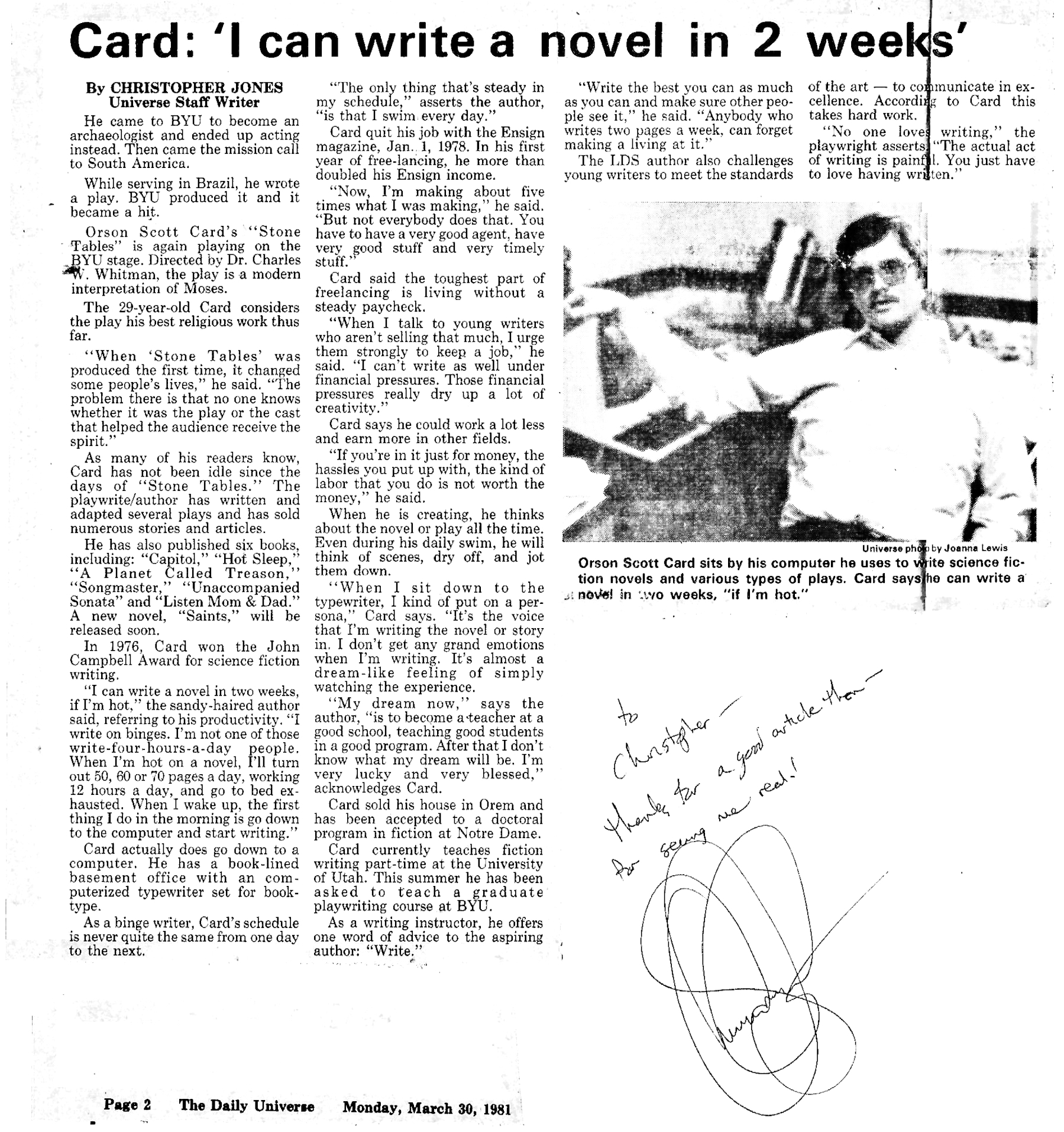
Oddly enough, almost twenty years after I interviewed Scott Card, my late wife had the opportunity of working closely with him to coordinate his writing seminars at Utah Valley State College (now UVU). At my bequest, Luella had Card sign a copy of the Daily Universe article I had penned. If you look closely at the photo of the news clipping, you’ll see the inscription: “To Christopher—thanks for a good article then—for seeing me real!” Apparently, at that moment in his career, the mainstream media wasn’t as enthusiastic about his fiction as I was. Card would later find fame with his Ender’s Game series, winning both the coveted Hugo and Nebula Awards for best science fiction, and achieving every writer’s dream—having your book made into a full-length motion picture.
I loved writing for the Daily Universe so much so that I even considered following my passion post-graduation. When my MBA program drew to a close, and it came time to interview for a job, I looked into three options: Journalism, Teaching, and Consulting. I ended up with an offer from a New York newspaper to come to visit if I was ever in the Big Apple, an offer to teach at a midwestern college, and an offer from Bain & Company. But feeding a family of five on what a reporter or teacher got paid back then, not to mention making a dent in my grad school loans, just wasn’t in the cards. So, I opted for the consulting position instead, at double the salary.
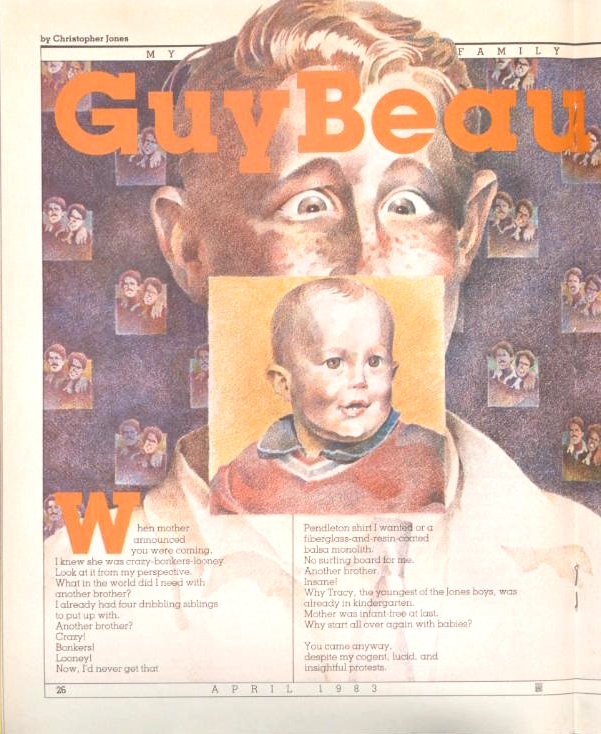
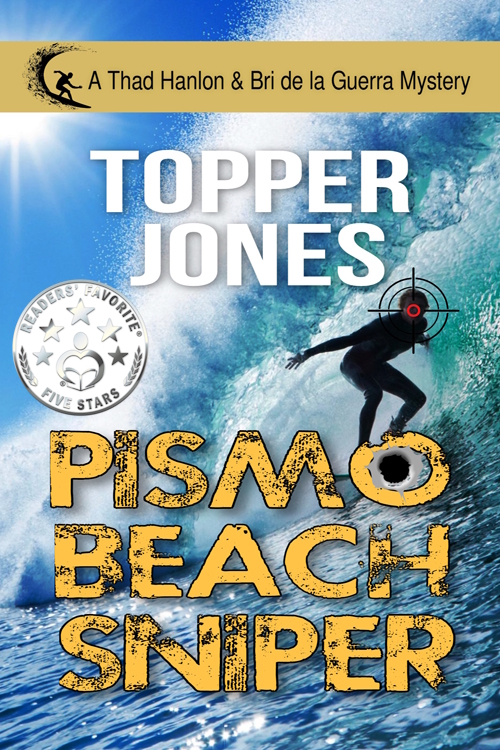
My next “ink fix” was in April 1983, when I published a poem entitled “GuyBeau” in The New Era magazine. Since then, I’ve had the good fortune of publishing additional poetry, one children’s story, two murder mysteries (with a third under publisher consideration), four coauthored college textbooks, and over fifty articles.
For an old paperboy with ink in his blood, there’s nothing better than seeing your byline in print.
Bonus Content
Here’s the full text of the Orson Scott Card interview:
Card: ‘I can write a novel in 2 weeks’
By CHRISTOPHER JONES
Universe Staff Writer
Monday, March 30, 1981, Page 2
He came to BYU to become an archaeologist and ended up acting instead. Then came the mission call to South America.
While serving in Brazil, he wrote a play. BYU produced it, and it became a hit.
Orson Scott Card's ‘Stone Tables’ is again playing on the BYU stage. Directed by Dr. Charles W. Whitman, the play is a modern interpretation of Moses.
The 29-year-old Card considers the play his best religious work thus far.
“When ‘Stone Tables’ was produced the first time, it changed some people's lives,” he said. “The problem there is that no one knows whether it was the play or the cast that helped the audience receive the spirit.”
As many of his readers know, Card has not been idle since the days of “Stone Tables.” The playwright/author has written and adapted several plays and has sold numerous stories and articles.
He has also published six books, including: “Capitol,” “Hot Sleep,” “A Planet Called Treason,” “Songmaster,” “Unaccompanied Sonata,” and “Listen Mom & Dad.” A new novel, “Saints,” will be released soon.
In 1976, Card won the John Campbell Award for science fiction writing.
“I can write a novel in two weeks, if I’m hot,” the sandy-haired author said, referring to his productivity. “I write on binges. I'm not one of those write-four-hours-a-day people. When I’m hot on a novel, I'll turn out 50,60, or 10 pages a day, working 12 hours a day, and go to bed exhausted. When I wake up, the first thing I do in the morning is go down to the computer and start writing.”
Card actually does go down to a computer. He has a book-lined basement office with a computerized typewriter set for book-type.
As a binge writer, Card’s schedule is never quite the same from one day to the next.
“The only thing that’s steady in my schedule,” asserts the author, “is that I swim every day.”
Card quit his job with the Ensign magazine, Jan. 1, 1978. In his first year of freelancing, he more than doubled his Ensign income.
“Now, I’m making about five times what I was making,” he said. “But not everybody does that. You have to have a very good agent, have very good stuff, and very timely stuff.”
Card said the toughest part of freelancing is living without a steady paycheck.
“When I talk to young writers who aren’t selling that much, I urge them strongly to keep a job,” he said. “I can’t write as well under financial pressures. Those financial pressures really dry up a lot of creativity.”
Card says he could work a lot less and earn more in other fields.
“If you’re in it just for money, the hassles you put up with, the kind of labor that you do is not worth the money,” he said.
When he is creating, he thinks about the novel or play all the time. Even during his daily swim, he will think of scenes, dry off, and jot them down.
“When I sit down to the typewriter, I kind of put on a persona,” Card says. “It’s the voice that I’m writing the novel or story in. I don’t get any grand emotions when I’m writing. It’s almost a dream-like feeling of simply watching the experience.
“My dream now,” says the author, “is to become a teacher at a good school, teaching good students in a good program. After that, I don’t know what my dream will be. I’m very lucky and very blessed,” acknowledges Card.
Card sold his house in Orem and has been accepted to a doctoral program in fiction at Notre Dame.
Card currently teaches fiction writing part-time at the University of Utah. This summer, he has been asked to teach a graduate playwriting course at BYU.
As a writing instructor, he offers one word of advice to the aspiring author: “Write.”
”Write the best you can as much as you can and make sure other people see it,” he said. “Anybody who writes two pages a week can forget making a living at it.”
The LDS author also challenges young writers to meet the standards of the art—to communicate in excellence. According to Card, this takes hard work.
“No one loves writing,” the playwright asserts. “The actual act of writing is painful. You just have to love having written.”
Join Me
Thanks for reading my blog. You can get more ideas for navigating today’s fast-paced publishing world in my popular email newsletter. Each issue, I share insights into the writing craft, tips for further exploration, and the latest news on the Thad Hanlon & Bri de la Guerra mystery series. Click the link below now and join us.
Try the free newsletter